Analytical lead: why metrics should lead the purchase decision
When you evaluate a wet-rated bathroom fan with integrated lighting and smart audio, the decision should begin with measurable performance—not marketing copy. Start with airflow (CFM), acoustic level (sones), and electrical draw (W). Those three numbers predict in-room humidity control, occupant comfort, and operating cost. For a practical touchstone, consider products such as the bathroom exhaust fan with light that advertise explicit CFM ratings and integrated speaker features; these let you map promised performance against code guidance like ASHRAE 62.2 and local ventilation requirements.
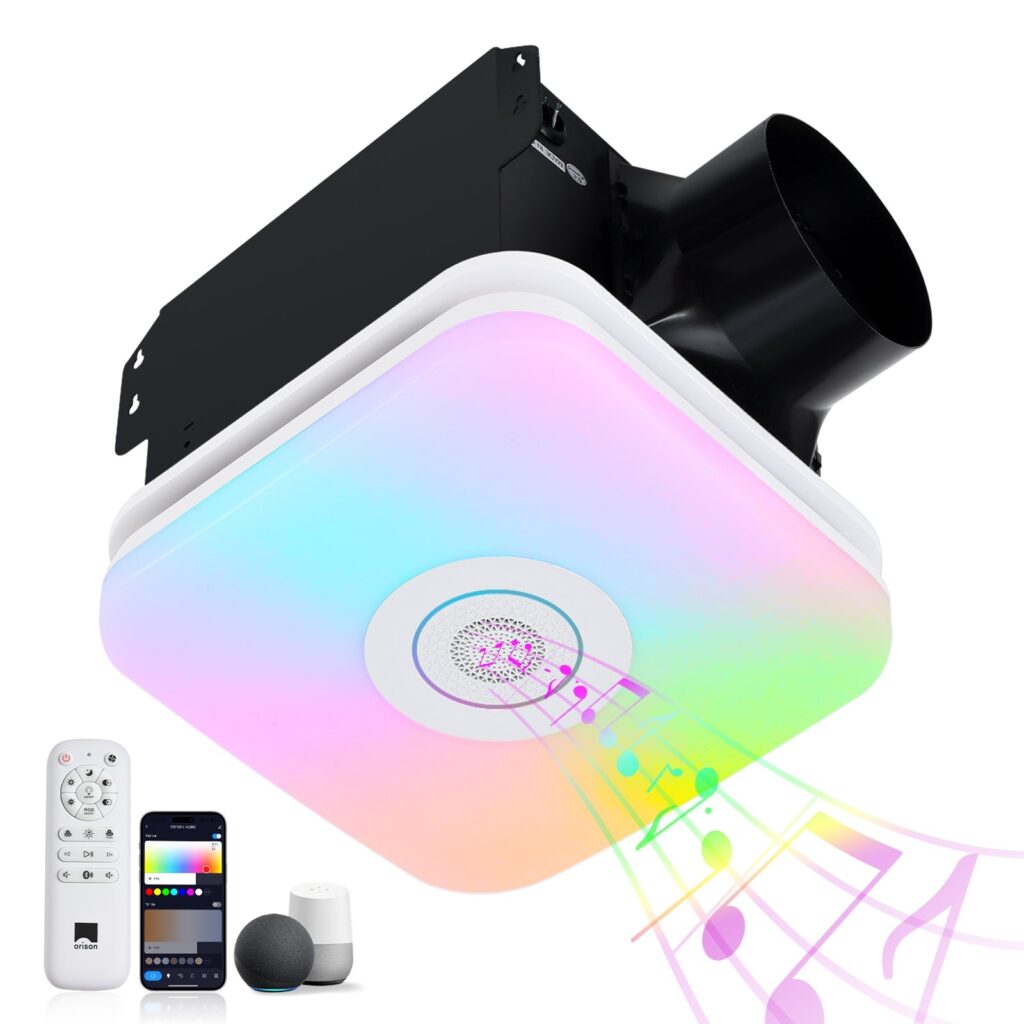
Key metrics and what they mean in plain terms
Frame decisions around a compact metric set:
- CFM (cubic feet per minute): how much air the fan moves. Direct proxy for moisture removal rate.
- Sones: perceptual loudness metric—lower is quieter (e.g., 0.5–1.5 is very quiet; >3 is loud).
- CFM/W or efficiency: airflow delivered per watt—useful for comparing energy use across models.
- IP/wet-rating or UL listing: compliance indicator for safe installation in wet zones.
- Integrated audio specs (watts, codec support, Bluetooth range): determines practical use for voice or music playback.
Limit yourself to 3–5 core metrics per model; each additional metric raises complexity with diminishing return.
Benchmark ranges and typical trade-offs
Using market samples and product datasheets, typical ranges look like this:
- CFM: 50–110 for single-bathroom units (50 common for small half-baths; 80–110 for tubs, multiple fixtures).
- Sones: 0.5–4.0; premium integrated units target ≤1.5.
- LED output: 600–1,200 lumens depending on fixture design and driver efficiency.
- Speaker power: 3–6 W per integrated module; audio fidelity scales with enclosure design and amplifier power.
Trade-offs are predictable: higher CFM typically increases noise unless motor design or insulation compensates. More speaker power can mean a larger housing footprint — which affects installation in shallow joist bays. — These are engineering constraints, not marketing choices.
Case snapshot: comparing an integrated 110 CFM unit to market averages
Take a 110 CFM unit with integrated lighting and Bluetooth audio as a reference point (Orison’s 110 CFM product is one such model). Against averages it typically offers:
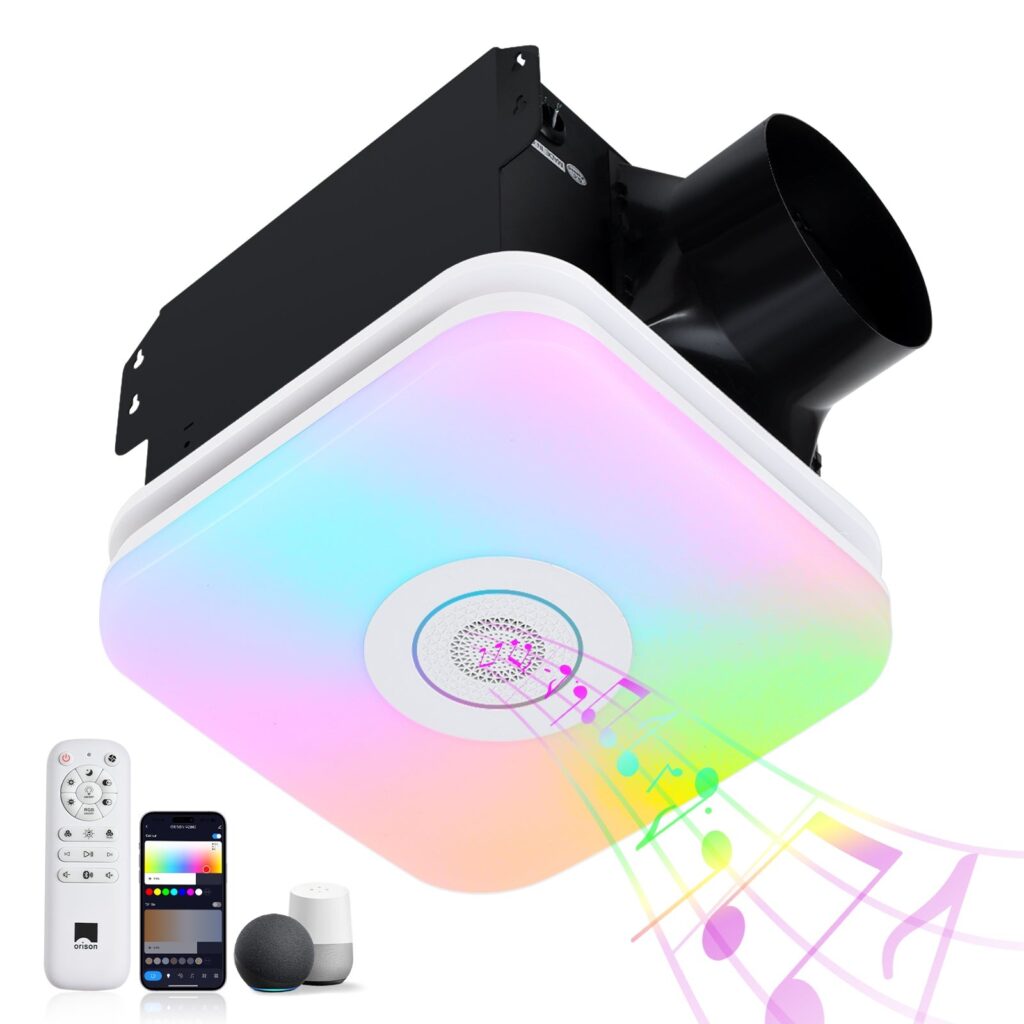
- Airflow: top-quartile CFM (110) — suitable for standard or large bathrooms.
- Noise: target design goal ≤1.5 sones for acceptable quiet operation in overnight use.
- Lighting: 800–1,000 lumens typical — sufficient as primary task lighting if color temperature is appropriate.
- Audio: Bluetooth speaker (3–5 W) adequate for casual music/voice; not hi‑fi.
- Compliance: wet-rated or IP-specified models meet safety codes for shower-adjacent mounting when listed appropriately.
For product comparison, see models labeled as bathroom fan with light and bluetooth speaker to compare nominal CFM, sones, lumen output, and wet‑zone certification side-by-side.
Installation variables that distort spec-to-performance mapping
Measured CFM at the unit can drop 10–40% once installed if ductwork, static pressure, or grille selection is suboptimal. Common installation pitfalls:
- Undersized ducting or long runs that increase static pressure and drop flow.
- Improper termination (no backdraft damper, short exterior vent) that increases noise and heat transfer.
- Incorrect electrical wiring or mismatched LED drivers that reduce lumen output or limit dimming capability.
Checklist: verify duct diameter, minimize elbows, and measure in-situ airflow with anemometer during commissioning — small upfront checks avoid returns.
Selection framework: a data-driven quick algorithm
Stepwise approach to pick the right integrated unit:
- Determine target CFM: small bathroom → 50 CFM; typical bath → 80 CFM; large or tub/shower combo → 100–110 CFM.
- Set acoustic threshold: require ≤1.5 sones for bedrooms-adjacent bathrooms; ≤2.5 acceptable for utility-only spaces.
- Require wet-rating/UL listing and a minimum CFM/W to control operating cost (compare CFM/W across candidates).
- Confirm physical fit and ductwork compatibility; plan for measured commissioning (airflow and noise).
Installation mistakes to avoid (practical notes)
Top recurring errors: buying based on marketing lumen numbers without checking color temperature or CRI; assuming “110 CFM” is what you’ll get post-install; or ignoring code—ASHRAE 62.2 and many local codes effectively set ventilation expectations that will influence required CFM. In practice, run a short functional test after wiring and before drywall closure — it saves labor and rework.
Advisory close: three critical evaluation metrics
Prioritize these three metrics when you compare integrated fan-light-audio systems:
- Airflow efficiency (CFM per watt): balances drying speed and energy cost; target models with higher CFM/W ratios.
- Acoustic performance (sones in situ): require measured sones or user-return statistics; quiet operation drives adoption and reduces complaints.
- Compliance & installation fit: wet-rating/UL listing, duct compatibility, and proven mounting details to avoid field derating.
Applying those rules narrows choices quickly and surfaces vendors that align engineering promise with installed reality. If you want the practical value of integrated airflow, light, and audio without guesswork, models that publish measured metrics (CFM, sones, lumens, and wattage) make procurement a data exercise rather than a leap of faith — and that’s where trusted, metric-forward vendors like Orison become relevant in real projects.
– measured performance beats hype every time
